We love the animals we treat. We love dogs. This is what makes us best veterinary doctor in Ranchi. We are just a phone call away. Call 9934177145 now to get appointments.
Dogs are inseparable part of family. This is why we at Vetpetz Ranchi aim to take care all your Pets needs. We are truely vet for your pets. Justdial 9934177145 for appointments. Our team always there to assist you.
Pet care center with a difference. We have Veterinary doctor in all our network dog hostels. Call 7209919859 to get appointment or visit our Vetpetz Ranchi Pet clinic in Kanke Road Ranchi
We at Vet Ranchi say "It was a good day". This is what happens to each of our team member, when they return home at night they smell more like dogs. That is our dedication to serve dogs and their owners. Call 9934177145 for appointmets.
We at Vet Ranchi have three vets in Ranchi and two paravets. Dr. suranjan Sarkar, chief veterinarian, Mr ajay paravet, Mr rahul, paravets trained as fluicd therapy specialist. All our vets and paravets have one quality , they know how to listen to pets problem. Call 9934177145 for appointments.
Canine Distemper as we know is a dreadful disease. Modern medicine through all its efforts fails 90%. There has been some cure in the past. Veterinarian used to cure this disease with accuracy. As it is told the introduction of NSAIDS people now resort to giving temporary relief rather than curing it. NSAIDs make this disease worse. In fact, we are going in wrong direction to find a cure for this disease this is why we are failing.
Why canine distemper was cured in the past and not now!
It all begins in 1947. S A Montgomery observed that certain dogs were the cure when given an injection of penicillin.
Later carrying forward Montgomer's observation Veterinary Dr. Sergio de la Torre of Jorge A. Calle 224 – Ciudad Mendoza – 0261 4296132 developed a treatment protocol. In his words
Canine distemper is a chronic viral disease caused by a pneumotropic virus of high morbidity and high mortality if the patient is not properly treated.
In past years, treatments were more effective (as described by Dr. Catalan 40 years ago), but with the appearance of NSAIDs (Non-Steroidal Anti-Inflammatory Drugs) and other drugs -such as corticoids, antihistamines, and antipyretics- the treatments diminished their effectiveness and worsened the symptoms of this disease. It led unavoidably to a slow and painful death occurred in the nervous phase of the disease- with meningitis, exhaustion, deep depression and death. Generally, it happens that the mutability of the virus is blamed, arguing that the virus has turned more aggressive; but, in fact, with the appearance of NSAIDS, the clinical response of this disease is deformed- the immediate symptoms are relieved but the disease is definitely worsened. In other words, it has an expected immediate response (temporary improvement) and a mediated NEGATIVE response to the organism (gastritis, drop of the defenses, it opens the blood-brain barrier, lowers the fever, etc.) All this is produced by NSAIDs.
Many times, in order to lessen the bearable pains and aches, we lead the patient to an unbearable pain: the nervous phase of distemper (meningitis) and, therefore, to a slow and PAINFUL death. Today, I can undoubtedly affirm: ‘If you want to kill a puppy, use aspirin”
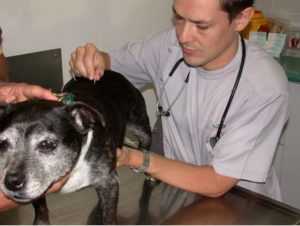
Canine distemper is undoubtedly a dreadful disease of dogs. Dogs do and can recover from the canine distemper. According to one estimate, fifty percent of adult dogs affected with canine distemper recover from the disease. In the case of pups, the chances of recovery are less, it is about 20%.
To know about cure lets quickly go through the disease.
The cause of canine distemper
The disease is caused by a virus belonging to family paramyxoviridae, closely resembling measles virus. This virus spreads through aerosol droplets. Therefore, when an infected dog sneezes on any unvaccinated dog there is a chance of contracting the disease.
Some recovered or infected dogs sheds virus for months. Any healthy dogs coming in contact with these infected dogs may get the disease.
Once the virus gets inside the dog's body it replicates fast inside the respiratory tract and goes into the gastrointestinal system, eyes, urogenital organs and also inside the central nervous system and nerves.
According to Small animal Paediatrics Canine distemper virus (CDV) is a multisystemic viral disease of dogs that affects puppies most commonly aged between 3 and 6 months.
Signs we see in Canine distemper
A transient fever sets in for 3-6 days and there may be leukopenia or decrease in a number of white blood cells.
The fever subsides for a few days but again relapses with more severity. The classical signs of distemper can now be seen. thick discharge from nose, eyes. The dog becomes lethargic, unable to walk or sometimes cannot even stand properly.
The dog refuses to eat. In later stages of the disease, the dog loses control to hold pee or poop and poop involuntarily.
If the dog survives this stage there will be a hardening of foot pads.
[caption id="" align="alignnone" width="398"] Hardening of the foot pad[/caption]
There shall be Enamel hypoplasia in affected dogs.
In later stages there can be seizures, both locally affecting only one or both limbs or generalizes seizure affecting the whole body.
<
Treatment- No specific treatment. Only symptomatic treatment is possible.
Some dogs recover without any disability, but the most permanent damage of their nerves.
As mentioned above there is marked Leukopenia of lessening of a number of white blood cells in the blood.
If by any means the number of white blood cells is raised then there is a fairly good chance of recovery.
According to AVMA there is no cure for distemper. Supportive therapy with fluid, antibiotics to prevent secondary bacterial infection, measures to control neurological signs are done. about 30% of affected dogs survive, some survive with disabilities for life.
Passive immunity
In some countries Canine distemper immunoglobulin is available, unfortunately, this product is not available in U.S.A. This immunoglobulin raises the chance of recovery. This author has successfully treated many distemper dogs with this immunoglobulin.
Homeopathy
This raising of WBC can be done by using some homeopathic medicine such as Distemperinum. According to IVC journal Distemperinum is effective in raising survival rates of affected puppies from 20% to 60%.
Acupuncture
Acupuncture offers promising recovery from distemper. Acupuncture works like magic in recovered dogs or dogs suffering from neurological impairments caused due to distemper.
Another promising avenue of treatment is by using antiviral drugs. According to Kate E. Creevy, DVM, MS, DACVIMAntivirals such as ribavirin, given alone or in combination with interferon-alpha, have been shown to be effective against CDV.
We all know that dogs can learn to respond to human words, but it’s not always clear what’s happening in a dog’s brain when they hear and recognize words like “cookie” and “fetch.” Do they have to rely on other clues, like gestures, to figure out what we mean by that word?
Do they picture a dog biscuit when you say “cookie,” or just the sensation of eating? In a new study, scientists from Emory University and the New College of Florida tried to get to the bottom of this question by training dogs to associate certain objects with words like “blue” and “duck,” then using fMRI brain scanners to see what was happening in the dogs’ heads when they heard that word.
Science daily says :
When some dogs hear their owners say "squirrel," they perk up, become agitated. They may even run to a window and look out of it. But what does the word mean to the dog? Does it mean, "Pay attention, something is happening?" Or does the dog actually picture a small, bushy-tailed rodent in its mind?
Frontiers in Neuroscience published one of the first studies using brain imaging to probe how our canine companions process words they have been taught to associate with objects, conducted by scientists at Emory University. The results suggest that dogs have at least a rudimentary neural representation of meaning for words they have been taught, differentiating words they have heard before from those they have not.
"Many dog owners think that their dogs know what some words mean, but there really isn't much scientific evidence to support that," says Ashley Prichard, a PhD candidate in Emory's Department of Psychology can be credited for this finding. He is first author of the study. "We wanted to get data from the dogs themselves -- not just owner reports."
NorthStar VETS veterinary emergency and specialty veterinary hospital in New Jersey is issuing a warning to people in the area with pets. Over the past several months, there has been a marked increase in the number of Leptospirosis cases treated at the hospital and at other veterinary hospitals in the NJ/NY/PA areas.
Dr. Steven Berkowitz, Emergency and Critical Care veterinarian for NorthStar VETS, said, "We want pet parents to be aware of Leptospirosis, and to consider vaccinating their at-risk pets to help prevent the spread of the disease. Each individual patient should be assessed by their family veterinarian."
In humans, Leptospirosis can cause a wide range of symptoms, including:
High fever
A headache
Chills
Muscle aches
Vomiting
Jaundice (yellow skin and eyes)
Red eyes
Abdominal pain
Diarrhea
Rash
If left untreated, Leptospirosis may cause kidney failure, brain damage, massive internal bleeding, and death.
Previously this disease was rare, but now it is becoming more and more common. There was a recent epidemic in Kerala India where as many as fifty people became sick due to leptospirosis.
[caption id="" align="alignnone" width="850"] WHO describes the transmission of leptospirosis as shown in the below gure. From the illustration it is shown that complications can happen to some organs if leptospirosis attacks. Therefore, leptospirosis cannot be considered as a mild disease .[/caption]

Leptospirosis in Pets
Signs and symptoms of leptospira infection in dogs
Fever
Vomiting
Abdominal pain
Diarrhea
Refusal to eat
Severe weakness and depression
Stiffness
Severe muscle pain
Inability to have puppies
Generally younger animals are more seriously affected than older animals.
If you think your pet may have Leptospirosis, contact your veterinarian immediately. Your veterinarian can perform tests to determine whether or not your pet has the disease.
People at risk:
People those are at risk for leptospirosis are outdoor occupation types or those which require people to be in direct contact with animals, such as ranchers, farmers, veterinarians, field workers, and military personnel.
Leptospira is no longer a disease of third world countries, it is now knocking our doors too. Therefore, if you see above symptoms in your pets, better rush to veterinarian.
Originally these ticks were found in deers. Probably due to the destruction of forests, constant human interference, these ticks now affects dogs too. Human is not its hosts, but they carry diseases that affect humans.
According to a new Columbia University study published in the journal Emerging Infectious Diseases, the invasive tick species may pose a greater risk in New York than previously thought.
According to Meredith VanAcker, a member of Diuk-Wasser's lab who collected the data as part of her Ph.D. thesis. "And because females don't need to find male mates for reproduction, it is easier for the population to spread." This makes this tick most dangerous. The tick was identified for the first time on a farm in Ames, Iowa in Hunterdon County on November 9, 2017.
As the temperature begins to rise and the flowers blossom, this little problem gets bigger and bigger.
How do tick affect us
There are many species of dog ticks that are harmless to us. Fortunately, only one or two species are a problem for us.
If you live in Northern hemisphere or in countries such as the USA or Canada, there is a disease called Lyme disease. Ticks carry these bacteria of Lyme disease known scientifically as Borrelia burgdorferi.
Contrary to popular belief, any ticks can carry Lyme disease bacteria. It depends upon the region you live in.
In the Northeast, Midwest, and South, of USA disease is transmitted primarily by the black-legged tick traditionally known as the deer tick. On the West Coast, the culprit is the Western black-legged tick (Ixodes pacificus).
In Canada, one in every five humans is at risk. Scientists expect more cases of Lyme disease this year. The situation in Canada is probably better, as per statistics.
[caption id="" align="alignleft" width="268"] Lyme Disease map of USA[/caption]
In 2017, 3943 dogs in Canada tested positively for Lyme Disease in contrast to almost 303,000 U.S. dogs. This year alone, there have been 179 positive cases of Lyme Disease in Canadian dogs as opposed to over 22,000 in the States.
This Newly found tick is yet to be studied. Instead of affected you through diseases such as Possawan virus or Lyme disease, these new ticks affect our systems directly through its toxin. This is why once bitten, these ticks can kill you in 48 hours.
What Ticks does to dogs
When there are ticks in the body of dogs, our dog is in trouble. There is always something wriggling in their body.
Sometimes these ticks go inside the dog's ear and it is double trouble. As a result, there is constantly itching. dogs itch their body and there is rash all over their body.
What exactly Lyme disease do to us!!
According to a study conducted by Ramb A, Ferreira M.A, Barraviera B, Haddad J.R.V. on The first reported case of human tick paralysis in Brazil found ticks can induce a motor illness causing an acute, ascending flaccid paralysis with a rapid clinical evolution and lethal if not immediately treated both in humans and in animals. It is mainly related to ixodid ticks by existent neurotoxins in the females saliva.
The symptom includes fever, a rash, and fatigue. If left untreated, Lyme disease can cause facial paralysis and heart and neurological disorders. This is just an oversimplification of the probable problems we might face.
Unfortunately, the hormonal system is the main victim of this disease. Blood glucose levels become altered, increasing adrenalin level, making us tired and depressed.
There may be hallucinations and schizophrenia-like symptoms. This is popularly known as psychiatric symptoms of Lyme disease.
Why Lyme disease is increasing
You may be wondering why Lyme is increasing. With modern day medicine, anti-tick sprays and deterrents the disease should decrease instead, it is rising. Well, This is happening due to global warming. Global warming gives Ticks longer time to feed, as there is longer spring or summer in countries like Canada. They get a better chance of multiplication.
Consequently, the researchers concluded that in warmer years, ticks emerged as much as three weeks early, which poses a risk to public health. This year 2018 is one such year. This is why authorities in Canada are extra cautious this time.
Other diseases which are transmitted to human via Dog ticks are
With the latest inventions in science, awareness and tick prevention measures, the population of ticks should have gone down. Instead, it keeps on increasing and through mutation, we are seeing deadlier ticks. Why is this happening!!
The reason being due to ignorance of only one fact.
Pesticides-
There is indiscriminate use of pesticides in pets, in forests, in crops, in our garden, in our drinks. Pesticides bring down our immunity and encourage mutation among other living organisms. The stakeholders of pesticide companies are big corporates.
[caption id="" align="alignnone" width="615"] Which countries use most pesticides?[/caption]
No country is thinking of controlling ticks naturally, it is almost always pesticides. We have learned nothing from DDT fiasco of the 70s. Pesticides are responsible for the deadly and quicker mutation so that ticks can kill you.
Perhaps human beings are destined to perish this way!
Our pets are like our children. Just like children when they roam our house, they stumble to many things and these sometimes cause hazards to them. Dogs, especially the young ones like to explore, they play with ropes, our shoes, etc. They unknowingly fell into accidents. Here I give a list of things to watch for.
Common household objects that are potentially hazardous
Electrical Cords
Lead-based Paint
Cleaning Supplies
Antifreeze
Insecticides
House Plants
Alcoholic beverages
Prescription drugs
Artificial sweeteners
Chocolates
Sewing needles, fishing hooks
Rat poison
Besides the above lists, there are some elements of house design that is hazardous to pets. An open window, Slippery floor, Stairs are also dangerous to pets.
Electrical cords- Cats like to chew electrical cord. To prevent them from getting electrocuted consider wrapping cords in rubber covers that can be purchased at most stores that sell electrical and home repair supplies. Putting the cords inside PVC tubing is also an option. You can also rub them with a citrus scent, which cats dislike and will avoid. [caption id="attachment_3084" align="alignnone" width="1024"] Cats like to chew wires, They can easily get electrocuted by chewing the electric wires.[/caption]
Lead-based paints- Thankfully lead-based paints are not common nowadays. Earlier lead poisoning used to happen in pets, but they still pose threat through old worn out batteries, etc. Keep your pets away from renovation projects.
Cleaning supplies- Laundry cleaner, glass cleaners, all-purpose cleaners, bathroom cleaners, drain opener, laundry detergent all are hazardous for pets. Keep them away from pets. Sometimes gaseous residue from cleaning agents pose threat to pets when they are let inside a room with these cleaning agents. Therefore, try keeping cleaning agents in a tight closet.
Antifreeze- Is a Sweet but Deadly Poison for Pets. Ethylene glycol, the main ingredient in most antifreeze brands, has an inviting aroma and a sweet flavour. Its appealing smell and taste often tempt animals and children to drink the highly poisonous substance. There are many household items that contain ethylene glycols. from lubricating paints, paint primers, floor cleaners, agricultural items. To see the full list click here.
Insecticides- Avoid chemical insecticide as much as possible. Dogs love a carpet of thick green grass. They run around on it, roll on it, dig it, and stick their noses in it. Whatever collects on their feet and coat outdoors stays there until the next time they get a bath. Consequently, when cats and dogs lick their paws they get poisoned. Better to use natural insecticides in your garden.
Household Plants. Chrysanthemums, daffodils, tomato plants, lily, and many other plants are hazardous for dogs and cats. To see the full list click here.
Christmas tree can be a hazard to your dog!
Christmas tree poisonous?
Pine, fir, or spruce, any evergreen tree contains small amounts of essential oils that make it smell great but hard on an unsuspecting stomach. The real danger though is consuming a big volume. If your pet acquires a taste for trees (either real or fake), enough pine needles can form a wad in the GI tract and cause an obstruction.
MAX KOBE OSCAR
COOPER OAKLEY MAC
CHARLIE REX RUDY
TEDDY BAILEY CHIP
BEAR CASH WALTER
MILO JASPER BLAZE
BENTLEY BO OZZY
OLLIE BOOMER ODIN
BUDDY LUCKY AXEL
ROCKY RUGER BRUCE
LEO BEAU ODIE
ZEUS BAXTER ARLO
DUKE OREO ECHO
FINN GUNNER TANK
APOLLO HENRY ROMEO
MURPHY SIMBA PORTER
DIESEL GEORGE HARLEY
TOBY COCO OTIS
LOUIE ROCKET ROCCO
TUCKER ZIGGY REMI
JAX PRINCE WHISKEY
ACE SHADOW SAM
JACK RILEY BUSTER
KODA COPPER BUBBA
WINSTON LUKE JAKE
OLIVER MARLEY BENNY
GUS ZEKE BOWIE
LOKI LEVI DOZER
MOOSE BENJI RUSTY
ARCHIE RANGER JOEY
BANDIT REMY KYLO
SCOUT DEXTER RYDER
THOR GIZMO TYSON
BRUNO CHASE SAMSON
KING CODY RAMBO
BLUE SARGE HARRY
ATLAS CHESTER GUCCI
THEO MAVERICK MILES
JACKSON LINCOLN WATSON
HANK WALLY PEANUT
TITAN